


The Best Analysis of the Types of Barbed Wire
Release time:
2024-09-18
Barbed wire can be classified in the following ways:
Barbed wire can be classified in the following ways:
- By material:
- Galvanized barbed wire:
- Hot-dip galvanized barbed wire: The surface of the wire is coated with a thick layer of zinc through the hot-dip galvanizing process, which provides excellent corrosion resistance. It can withstand harsh outdoor environments such as rain, snow, and sunlight for a long time, making it widely used in areas such as railways, highways, and farms for perimeter protection9.
- Electro-galvanized barbed wire: The zinc coating on the surface is relatively thin, resulting in lower corrosion resistance compared to hot-dip galvanized barbed wire. However, it is relatively cheaper and can still meet the basic anti-corrosion requirements in some less demanding environments.
- Stainless steel barbed wire: Made of high-quality stainless steel materials, it has strong corrosion resistance, high strength, and good durability. It is not prone to rust and corrosion even in harsh chemical or coastal environments. Therefore, it is often used in high-end residential areas, coastal resorts, and some special industrial sites that require high corrosion resistance12.
- PVC-coated barbed wire: The wire is coated with a layer of PVC (polyvinyl chloride) material, which not only provides a certain degree of corrosion protection but also gives the barbed wire different colors such as green, blue, yellow, etc. This makes it more suitable for use in places where both protection and aesthetics are required, such as parks, schools, and residential communities11.
- Galvanized barbed wire:
- By blade shape:
- Ordinary barbed wire: The blades are straight spikes with a relatively simple shape. It is cost-effective and can play a certain role in preventing people and animals from crossing. It is commonly used in agricultural fields, orchards, and some general-purpose protection areas2.
- Blade barbed wire: The blades are sharp and are usually arranged in a spiral shape on the wire, forming a unique and highly deterrent structure. It has strong anti-climbing and anti-intrusion capabilities and is mainly used in high-security places such as prisons, detention centers, military bases, and border areas2.
- By weaving method:
- Single-strand barbed wire: Consists of a single wire with barbs attached at regular intervals. It is relatively simple in structure and is suitable for some areas where the protection requirements are not extremely high, such as temporary construction sites or small farms12.
- Double-strand barbed wire: Made by twisting two wires together and then attaching barbs. It is more sturdy and durable than single-strand barbed wire, providing better protection performance. It is widely used in various protection projects such as industrial plants, warehouses, and public facilities12.
- Spiral barbed wire: The wire is wound in a spiral shape, which can increase the length of the barbs and enhance the deterrent effect. It is often used in places where continuous and effective protection is needed, such as the perimeter of large factories or the border of certain areas.
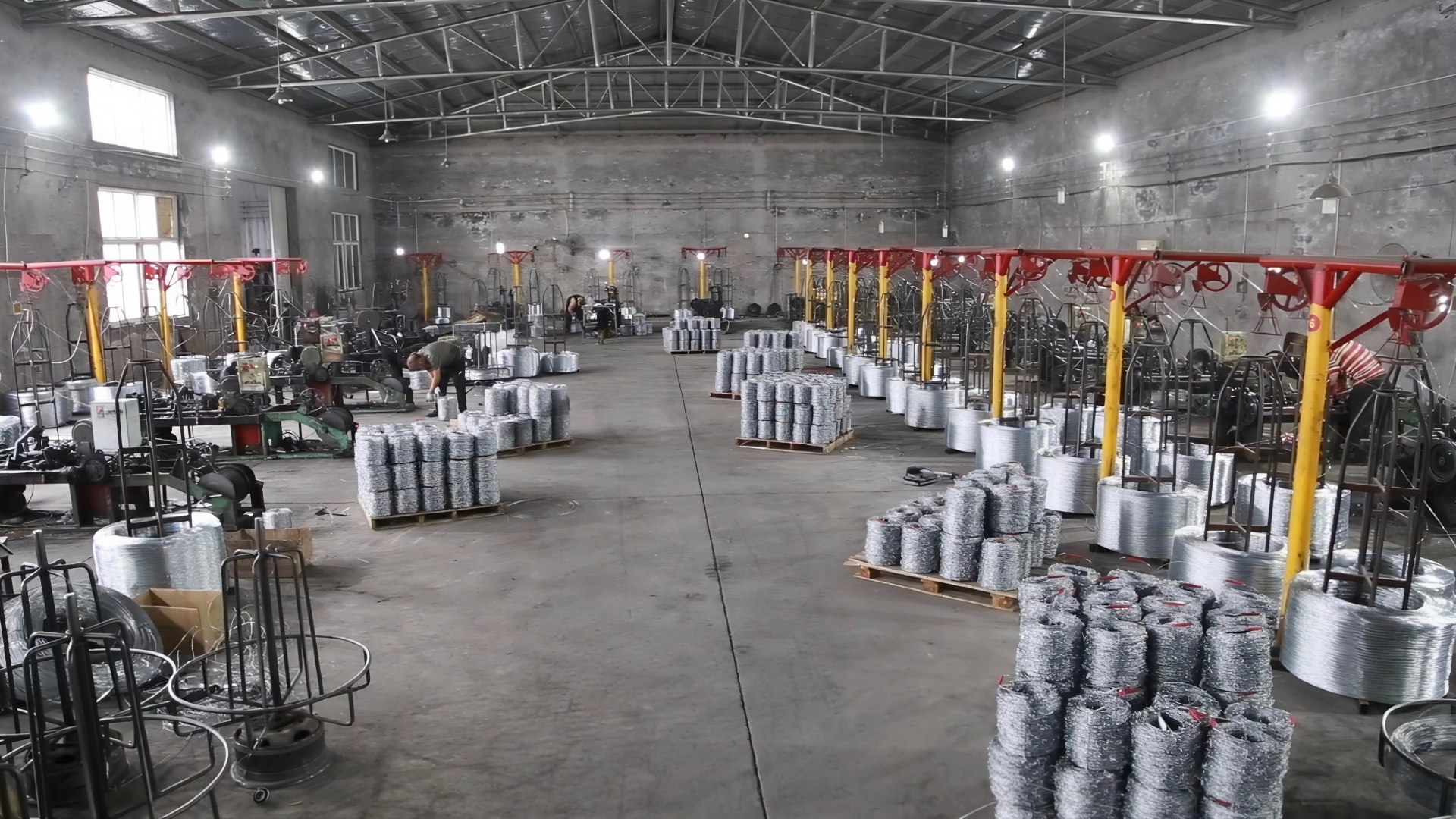
Here are some factors to consider when choosing the right barbed wire:
1. Consider the application environment:
- Outdoor environments:
- If for outdoor use such as farms, pastures, or along perimeters exposed to the elements, galvanized barbed wire, especially hot-dip galvanized barbed wire, is a good choice due to its excellent corrosion resistance. It can withstand rain, sunlight, and temperature changes.
- In coastal areas with high salt content in the air, stainless steel barbed wire or PVC-coated barbed wire with good corrosion resistance is more suitable to prevent premature rusting.
- Industrial areas:
- For industrial sites with potential chemical exposure or high levels of dust and pollution, stainless steel barbed wire or specially coated barbed wire that can resist chemical corrosion and abrasion is preferred.
- Areas with heavy machinery or potential impacts may require stronger barbed wire like double-strand or spiral barbed wire to withstand accidental collisions.
- Residential areas:
- In residential neighborhoods or gated communities where aesthetics are also a consideration, PVC-coated barbed wire in colors that blend with the surroundings can be a good option. It provides a certain level of security while not being overly obtrusive.
2. Assess security requirements:
- Low-security needs:
- For areas where the main purpose is to mark boundaries or deter casual trespassing, such as small gardens or private properties with low risk of intrusion, ordinary single-strand barbed wire may be sufficient.
- Areas where only animals need to be deterred, like chicken coops or small livestock enclosures, can also use less aggressive barbed wire.
- High-security needs:
- Prisons, military installations, and high-security industrial facilities require blade barbed wire with its sharp blades and high deterrence. It is difficult to climb over and provides a strong physical barrier against unauthorized access.
- For areas with a history of frequent break-ins or where valuable assets are stored, double-strand or spiral barbed wire with increased strength and complexity can enhance security.
3. Consider budget constraints:
- Low budget:
- If cost is a major concern, electro-galvanized barbed wire or single-strand ordinary barbed wire can be considered. They are relatively inexpensive but still offer some level of protection.
- Look for deals from different suppliers and compare prices without sacrificing too much on quality.
- Higher budget:
- With a more generous budget, one can opt for stainless steel barbed wire or high-quality hot-dip galvanized barbed wire with longer lifespans and better performance.
- Consider investing in more advanced types like blade barbed wire or PVC-coated barbed wire for added security and aesthetic appeal.
4. Check local regulations and building codes:
- Some areas may have specific regulations regarding the type, height, and installation of barbed wire. Make sure to comply with these regulations to avoid legal issues.
- In some residential areas, there may be restrictions on the use of certain types of barbed wire due to safety or aesthetic concerns. Check with local authorities or homeowner associations before making a decision.

Addtional Resources
- types of barbed wire different for fence garden farm
- Barbed Wire Fencing Systems for Beginners!
- Barbwire - definition of barbwire by The Free Dictionary
- Galvanized Barbed Wire for Security Fence
Keywords:
More information


Contact
Phone/WhatsApp:
E-mail:
Address:
Huangtai Industrial Park, Xiaozhan Town,
Jinnan District, Tianjin, 300353, China
Follow us

Inquiry