


Best Analysis of the Difference Between Galvanized Wire and Modified Drawn Wire
Release time:
2024-08-14
Galvanized wire and modified drawn wire have the following differences:
Galvanized wire and modified drawn wire have the following differences:
Galvanized wire: It is coated with zinc to enhance durability and corrosion resistance. The zinc coating acts as a protective layer, preventing rust and corrosion. Galvanized wire is further divided into hot-dip galvanized wire and cold galvanized wire (also known as electro-galvanized wire):
-
Hot-dip galvanized wire is produced by dipping the wire in molten zinc at high temperatures. It has a relatively thick coating, but the thickness may not be very uniform. The color is darker, and it offers good corrosion resistance. In outdoor environments, it can last for decades.
-
Cold galvanizing (electro-galvanizing) involves plating zinc on the metal surface through an electroplating process. This results in a slower production speed, a more uniform coating, but with a thinner thickness, usually only about 3-15 microns. It has a brighter appearance but poorer corrosion resistance, and may rust within a few months. Compared to hot-dip galvanizing, the production cost of electro-galvanizing is lower.
Modified drawn wire: This wire is made from either hot-dip galvanized or electro-galvanized iron wire. Its surface is smooth and bright, and its tensile strength becomes stronger. It is mainly used for various purposes such as making clothes hangers, drawing, construction, communication, web weaving, brush making, high-pressure tubes, binding wire, and handicrafts. It offers high quality at a low price, and a wide range of wire diameters for selection. The use of binding wire avoids the need for frequent maintenance, and it is increasingly utilized in daily life and leisure settings.
In terms of inspection standards for galvanized iron wire:
-
Firstly, measure the diameter of the electro-galvanized wire evenly using a micrometer, ensuring it is approximately 0.02 mm above and below the contracted standard. The appearance should be neat, without any plating leakage or wire tangling.
-
Secondly, conduct an acid fog test on a 20-cm galvanized wire sample. Through a balance test, check whether the zinc content on the galvanized iron wire meets the customer's requirements for the zinc layer standard. This ensures that the metal wire achieves the effect of rust and corrosion prevention, meeting the customer's service life requirements.
-
Finally, the inspection standard for the appearance of galvanized iron wire requires that the packaging be intact, and the end of the binding wire should be inward to prevent scratches to personnel during handling.
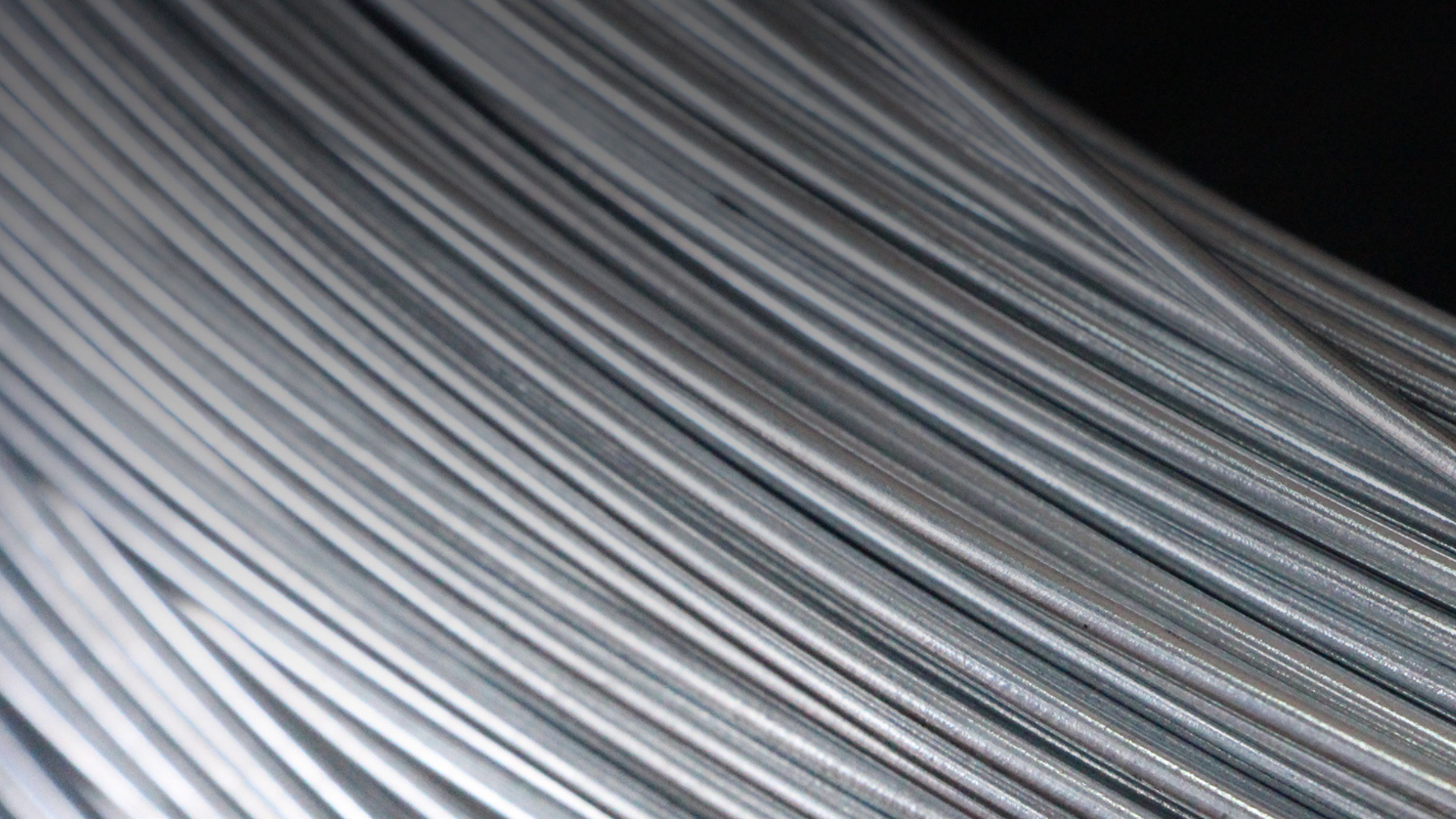
Here are some ways to distinguish whether a metal wire is galvanized wire or drawn wire:
-
Appearance: Galvanized wire usually has a zinc coating, which gives it a silvery or dull grey appearance. The coating may not be perfectly uniform. Drawn wire typically has a smoother and brighter surface without the obvious zinc coating.
-
Corrosion resistance: Galvanized wire has better corrosion resistance due to the zinc layer. You can perform a simple corrosion test by exposing a small section of the wire to a humid or corrosive environment for a short period. Galvanized wire will show less corrosion compared to drawn wire.
-
Weight: Due to the additional zinc coating, galvanized wire is usually slightly heavier than drawn wire of the same size.
-
Scratch test: Lightly scratch the surface of the wire with a sharp object. If it shows a layer of zinc underneath, it's likely galvanized wire. If there's no such layer and the exposed metal is the same color throughout, it may be drawn wire.
-
Chemical test: Using specific chemical reagents can help determine if there is zinc present, but this method is less commonly used in practical situations.
-
Refer to product documentation or labels: If the wire is from a reliable source, there might be labels or documentation indicating whether it is galvanized or drawn.
It should be noted that these methods may not provide 100% accurate determination, especially for wires that have undergone complex processing or have less distinct characteristics. In some cases, professional testing equipment or expertise might be required for a precise identification.

Addtional Resources
- The difference between galvanized wire and modified drawing wire
- Galvanised vs. PVC-Coated Steel Wires
- ANALYSIS AND IMPROVEMENT OF THE GALVANIZED
- Suitability of locally manufactured galvanized iron (GI) wire
More information


Contact
Phone/WhatsApp:
E-mail:
Address:
Huangtai Industrial Park, Xiaozhan Town,
Jinnan District, Tianjin, 300353, China
Follow us

Inquiry